
"It's All an Education" highlights from pasic 2026
Had you told me as a kid that someday 300 people would wait in a long line to watch a young girl with long hair play a five-minute snare drum solo, I'd have believed you. And I'd have been so excited about the future I'm currently living in. For me, the opening of PASIC (Percussive Arts Society International Convention)was Athena Percussion, an all-women ensemble, who began with a quote from When the Women Were Drummers. Then Genevieve Hilburn played Lorena Navarro's toe-ness (a snare drum solo), and the whole room was captivated.
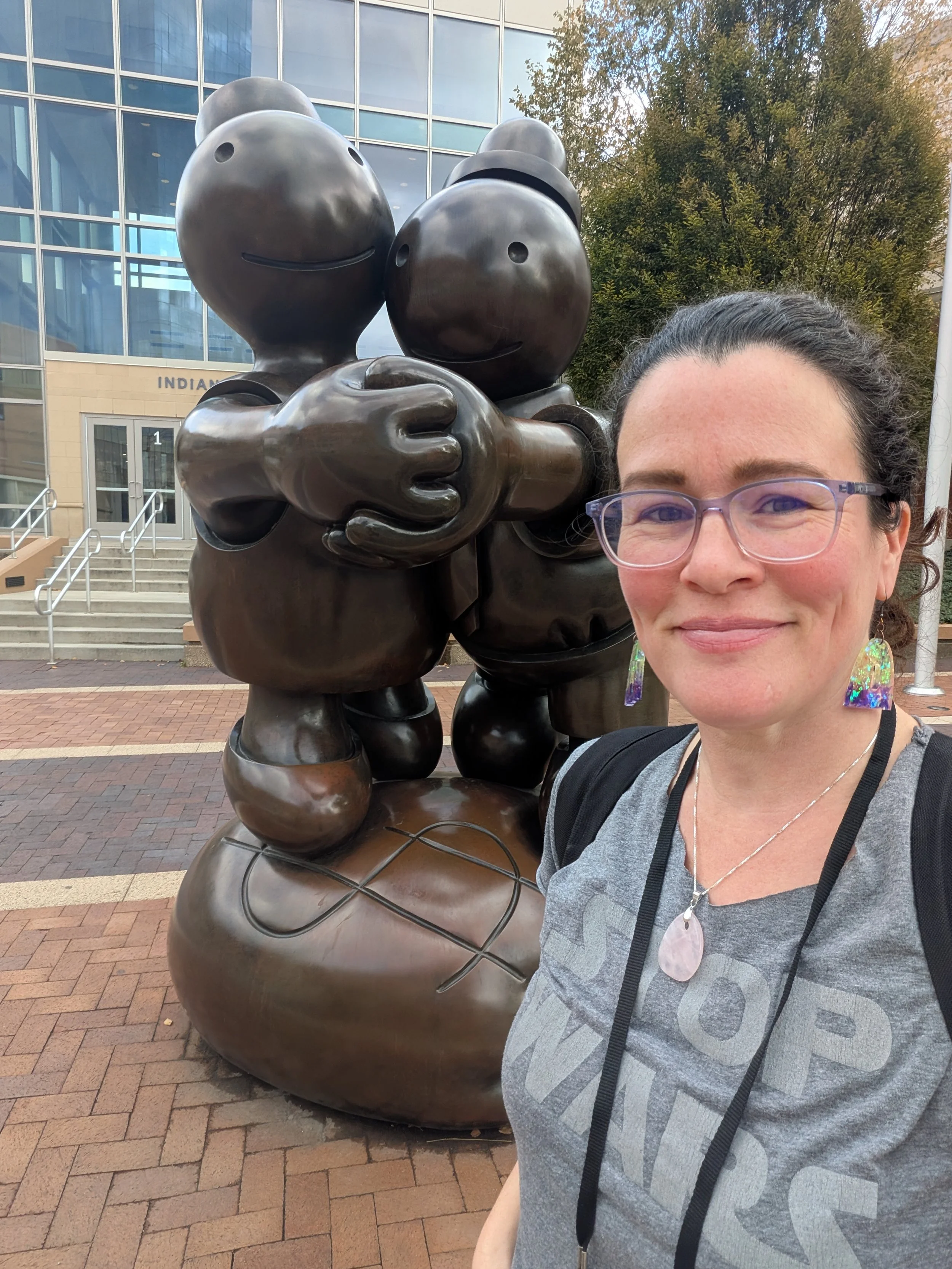
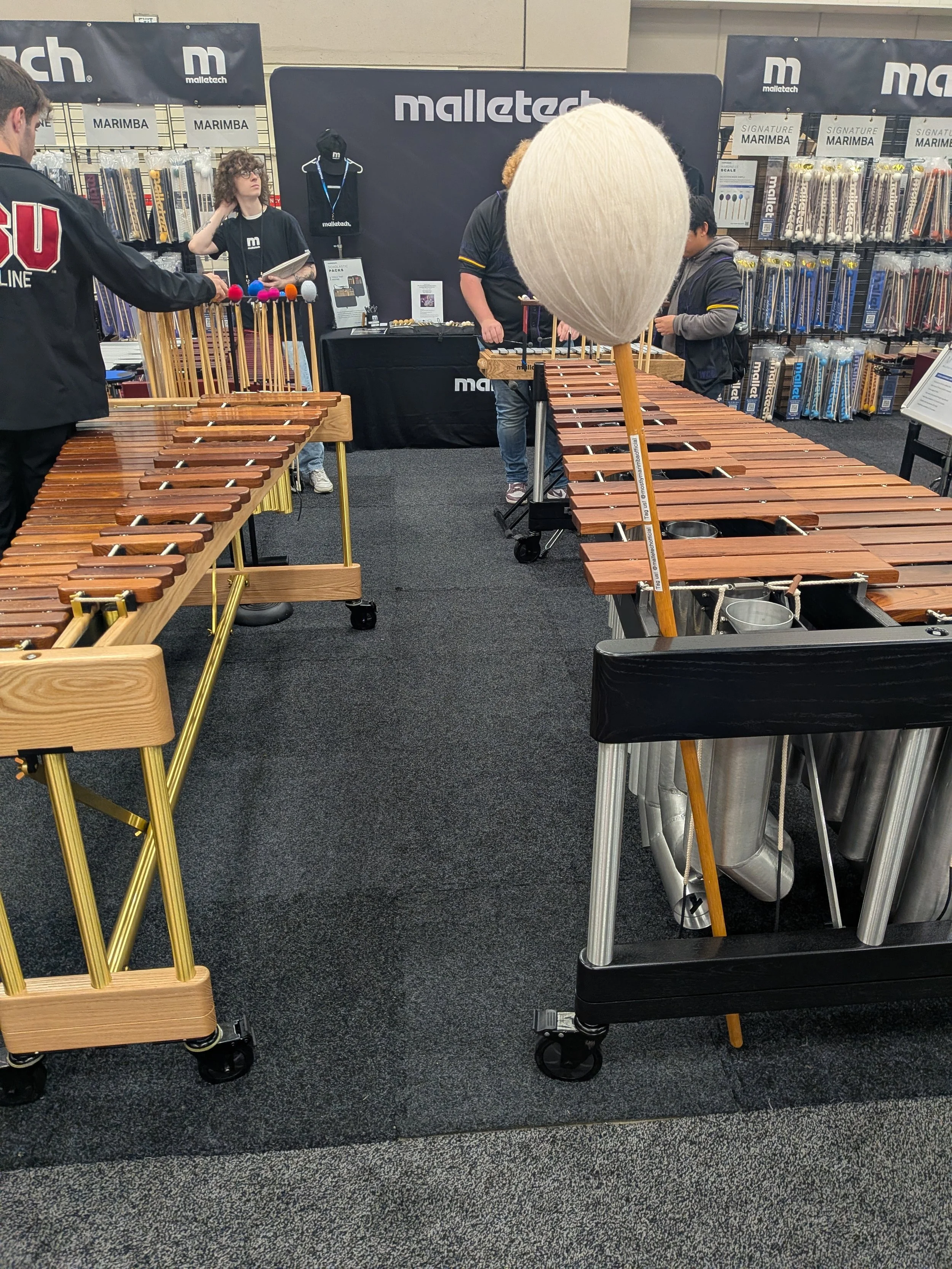
I'm a music therapist, and I teach and play percussion, so a few days in a room full of drummers is a kind of homecoming for me. This year I noticed something specific: it was four days without screens, just real performances on (mostly) acoustic instruments, among people who share a passion. Nobody had to explain why it matters. Nobody questioned a conversation about the angle of a tambourine or the tuning of timpani.
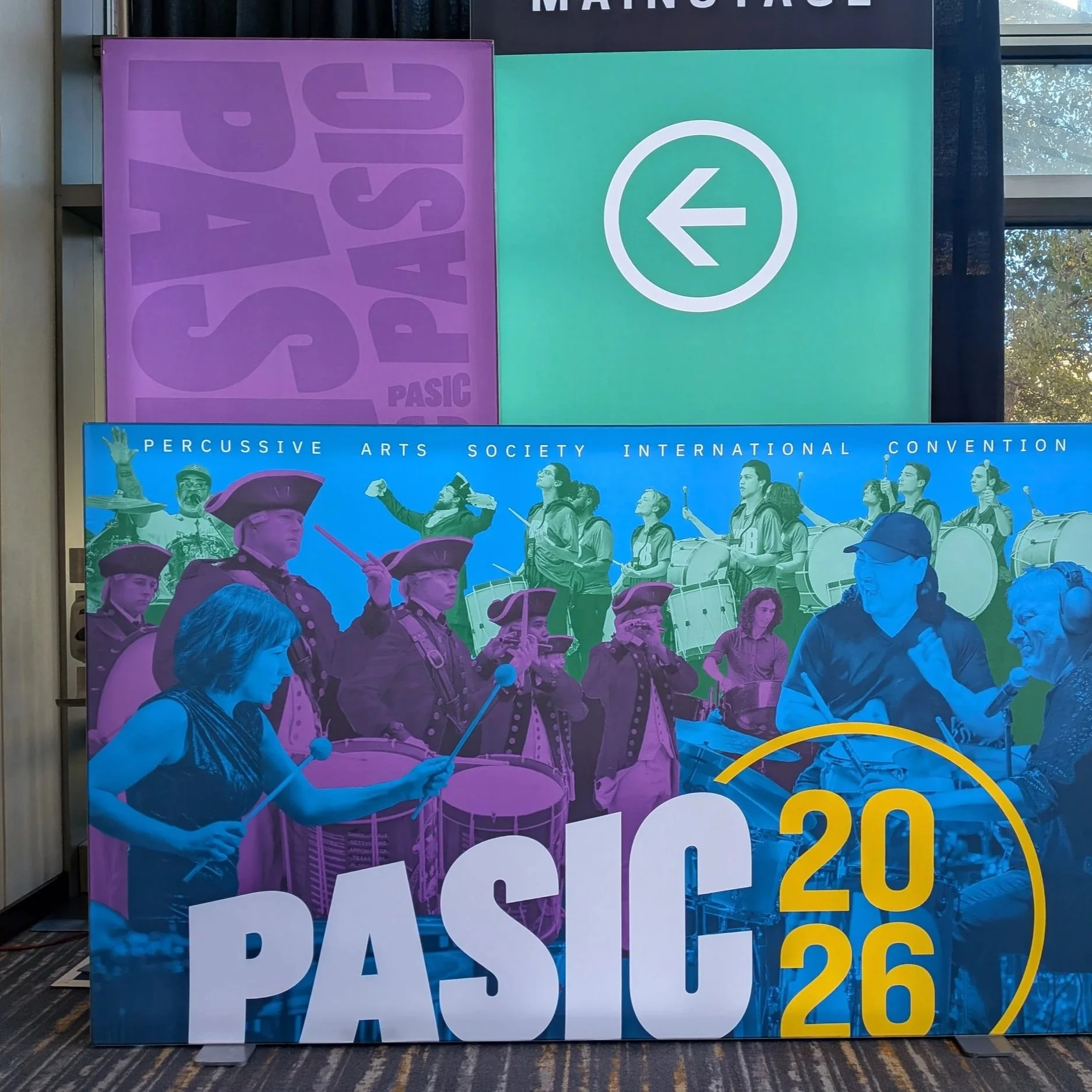
Here are some of the moments I'm still thinking about.
"Not everybody wants to be a pioneer": Raychel Taylor of Girls March
Raychel Taylor's talk was my favorite of the week. She spoke about how to make classrooms and music programs more welcoming to women and nonbinary students, and she opened with a line that stopped me: "Not everybody wants to be a pioneer." She described what pioneering really involves: cutting a path through the jungle and facing scary animals so the people behind you don't have to deal with as much. It seems heroic, but it shouldn't be the price of admission for every student who walks into a percussion room.
She also reminded teachers that music has to be bad before it's good, and that students of all genders may internalize the feedback we give them. As someone who teaches percussion and works with clients every week, it was a good reminder of how different the music therapy room is, where the music doesn't have to be good at all.
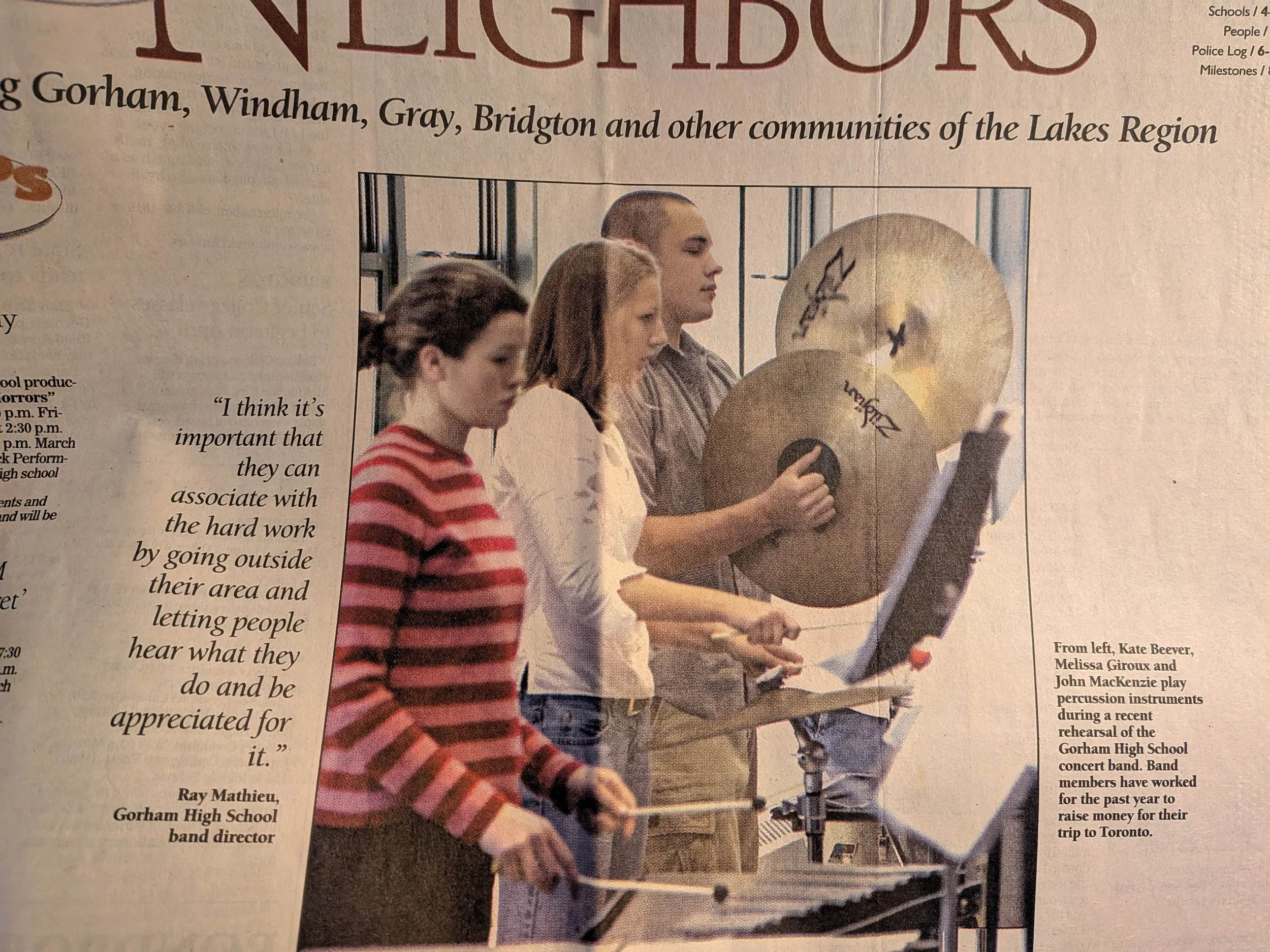
(photo right: an image of me in high school band)
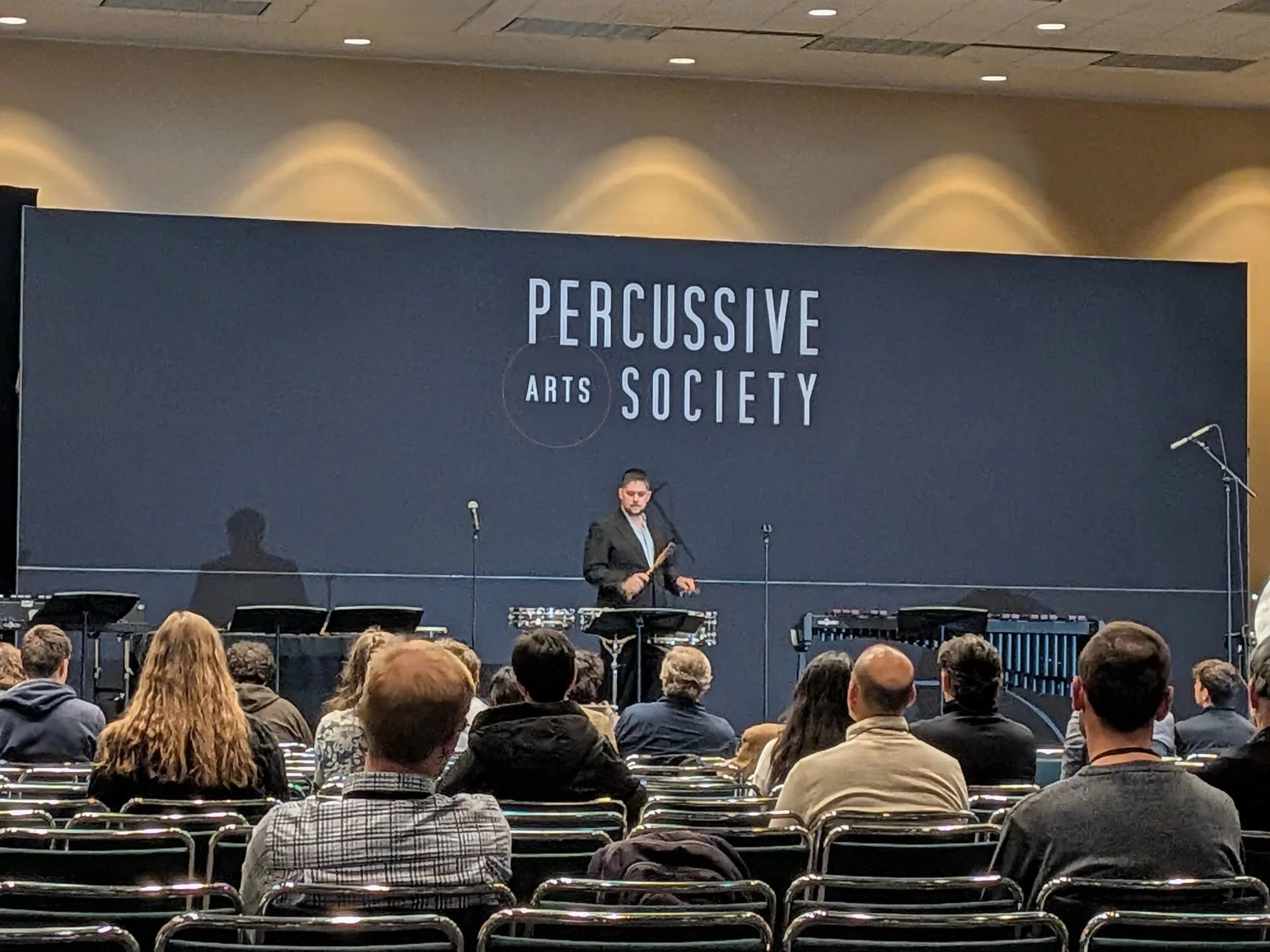
“What is touch?” with Joe Kelly
I could have sat through this discussion for another six hours. One of the things I love about percussion is how many specific sounds you can get out of one small instrument, so I was thrilled when Joe Kelly spent time on the tambourine.
When I started teaching percussion in the music therapy program at Berklee, I wanted each student to improvise on a tambourine for two minutes, just to feel this for themselves. It didn't fit the course description, so I had to cut it. But it's fascinating: angle the tambourine slightly differently and you hear a completely different response. To play it well, you have to understand it deeply.
Kelly's descriptions have stayed with me. Of the triangle, he said, "It's a circle that has infinite points of contact." On crash cymbals, he explained that once they're ringing you have more to work with, so the second crash gets more of the sound you want: first you make contact, then you catch the resonance.
His larger point was that we can find a technical philosophy that connects across instruments. That's one of the unusual things about being a percussionist: we learn and play instruments from many different traditions. As he put it, "We have a responsibility to play a lot more material than what's put on the page."
That's true in therapy, too. We aren’t specialists of a certain musical or therapeutic style, we have to be able to walk into a room and connect with the person and environment, translating that into music. Much of that is not on a page that can be taught.
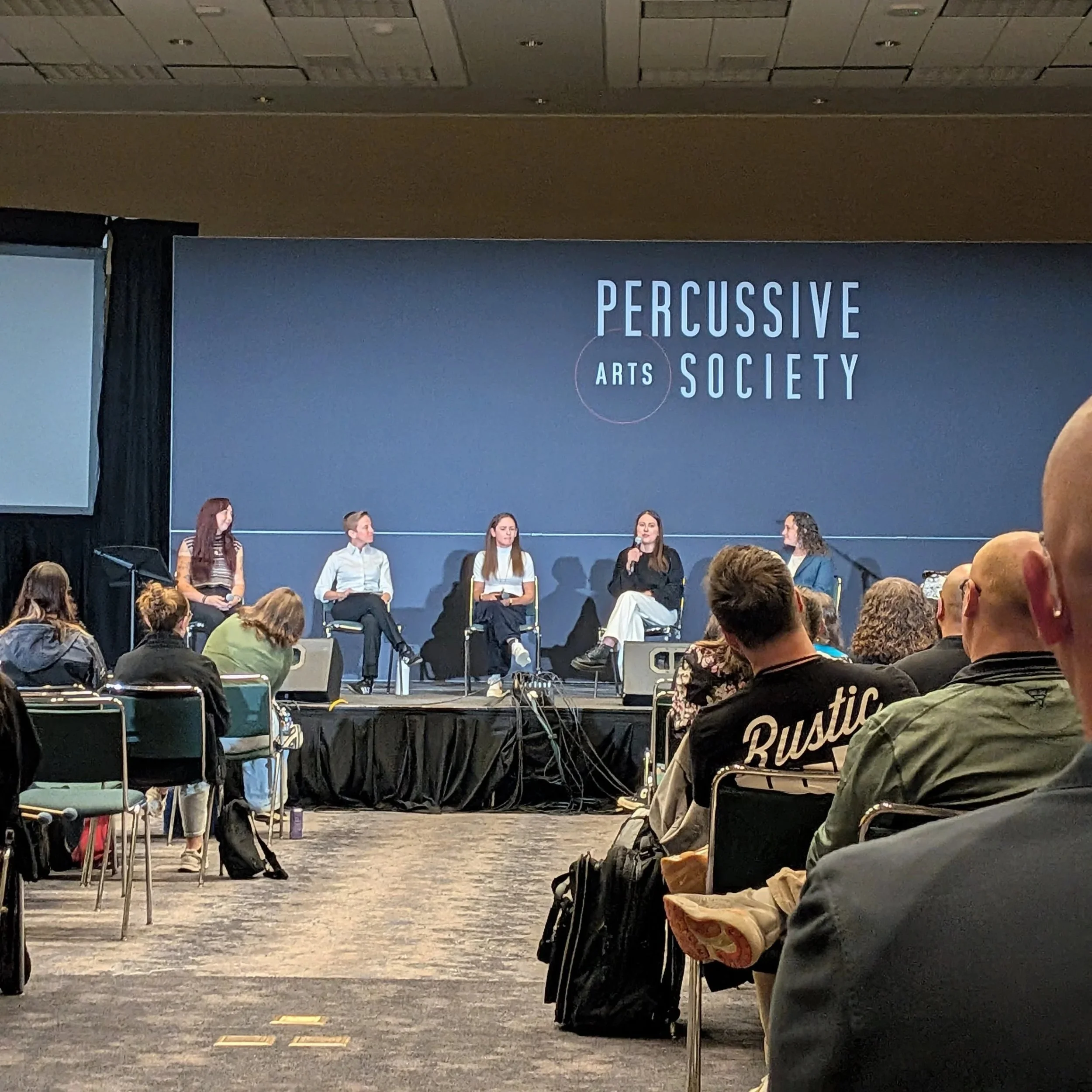
Women of the Marching Arts panel
I didn't grow up with marching band, since none of my schools had it. But it sounds like so much fun! I ended up being glad I attended, because one of the speakers was also a music therapist. She shared that she'd chosen music therapy because it felt like the safest career. Her work was very special, but something in her felt out of balance, and she eventually decided it wasn't sustainable. She also spoke about having to prove herself in both fields in order to gain respect, and how that creates self-doubt about her own capabilities. I related to all of it so deeply.
Part of what made this conference so energizing was being around people with a shared passion, which is why that story landed so hard. I don't think music therapy was a 'safe choice' for me.. I knew I didn't want to compete and perform full time. But I do deal with the "prove yourself" piece every day of my career, and it is so tiring. To hear that named out loud by someone with a similar path was helpful.
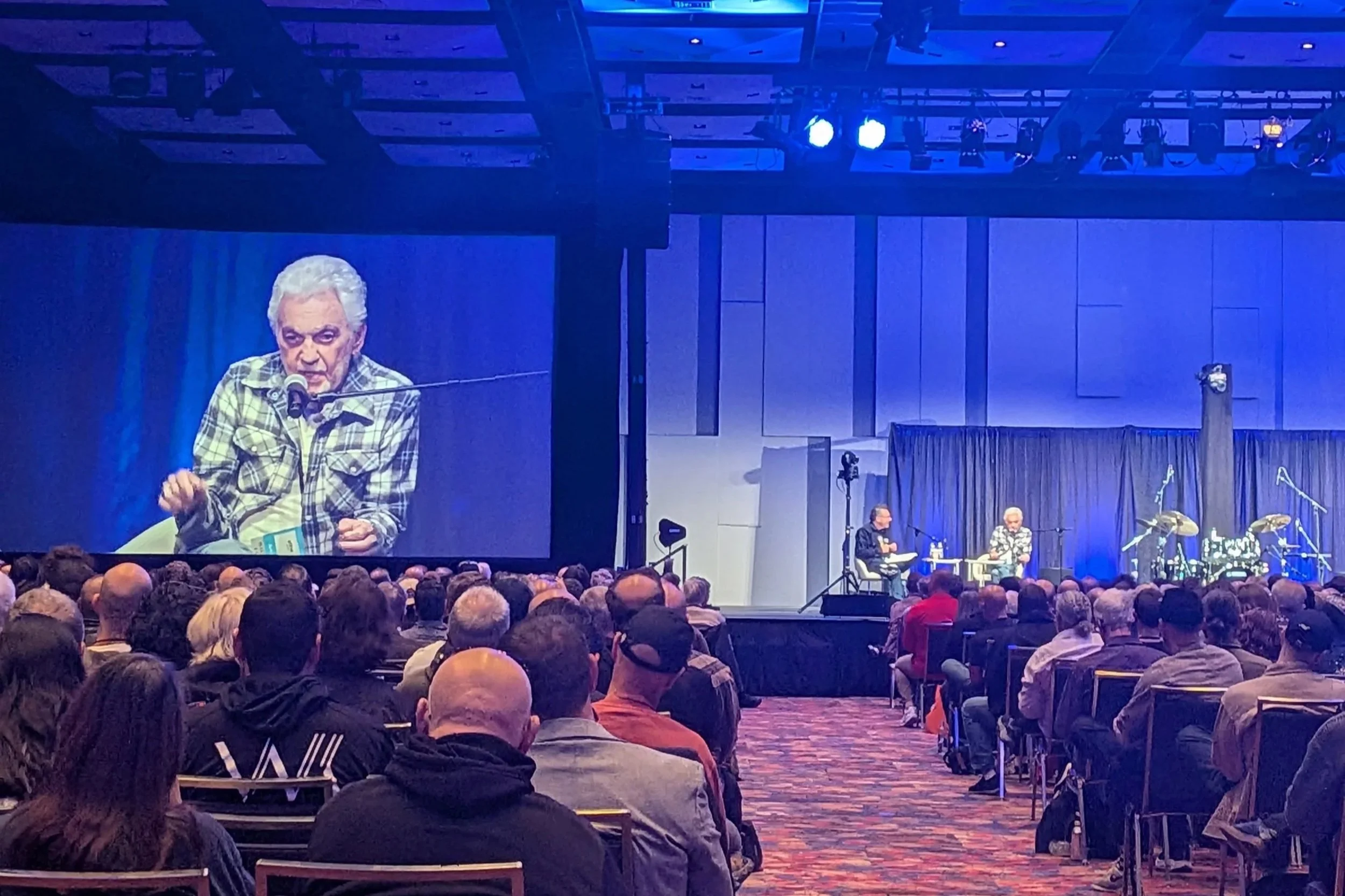
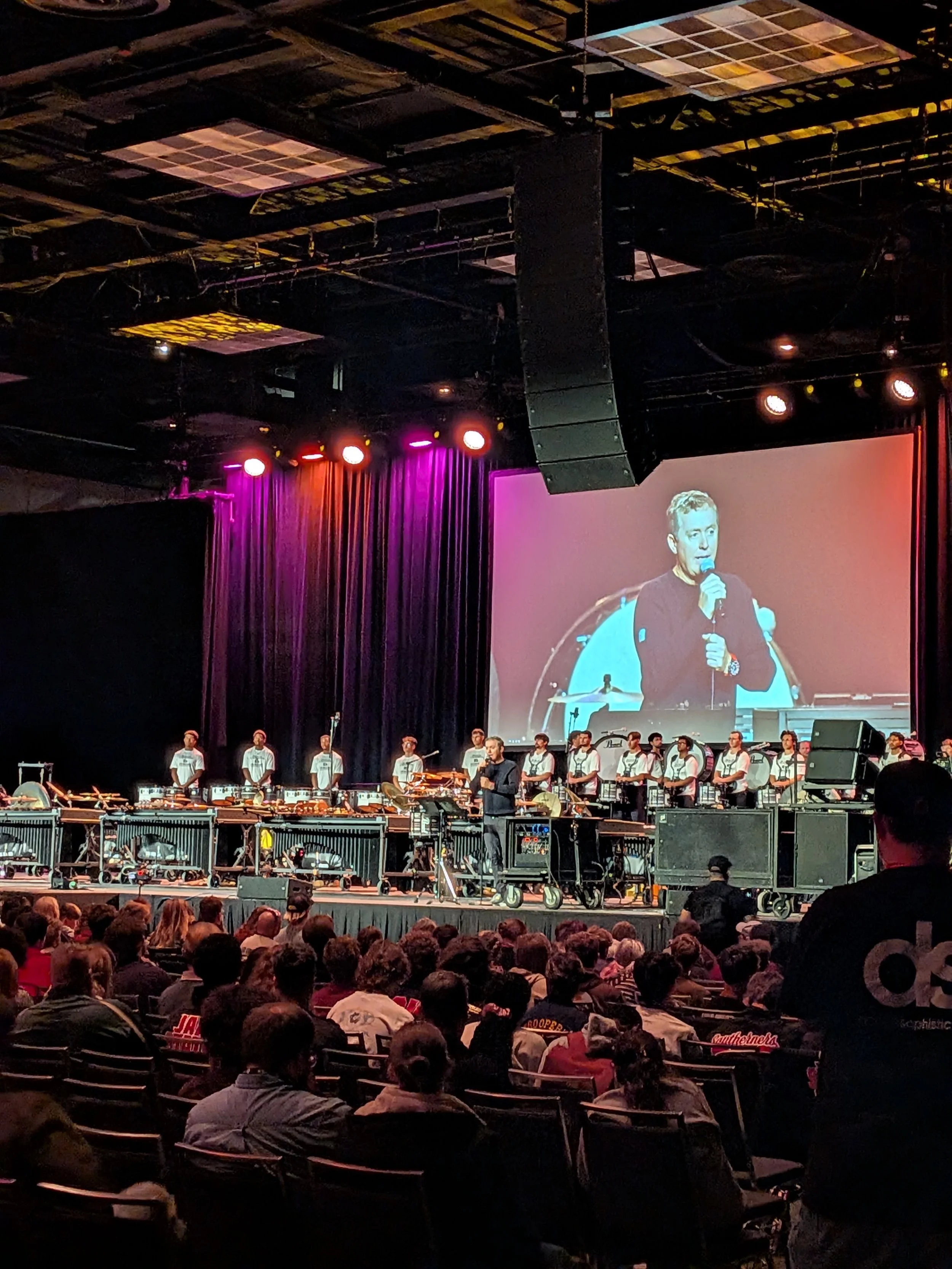
Steve Gadd with Joshua Simonds
This one was great, obviously. The line was SO long, and someone made the fair point that drummers would probably line up just to watch Steve drink his morning coffee.
He shared a lot of wisdom, but my biggest takeaway was about simplifying what you learn on the drumset: get in the pocket and give the music space. That can be even more challenging than having chops (which we know he has). He talked about the insecurity of the recording studio, especially when working with musicians who ask for very specific parts. His answer: "Music is an agreement." I’ve been thinking about whether the relationship in music therapy brings the same types of agreement as in the recording studio.
My favorite Gadd quote of the day: "It's all an education, if you keep your mind open to it."
One more thing I noticed all week, and Gadd's talk was the best example of it: people paid respect to their teachers. The Hellcats did it, and so did nearly everyone else I heard. Gadd's own drum teacher was in the audience, and he got a standing ovation. In a field where so much of the focus is on the person on stage, it was moving to see how much credit went to the people who got them there.
Quick hits
A few more moments from the week that deserve a mention:
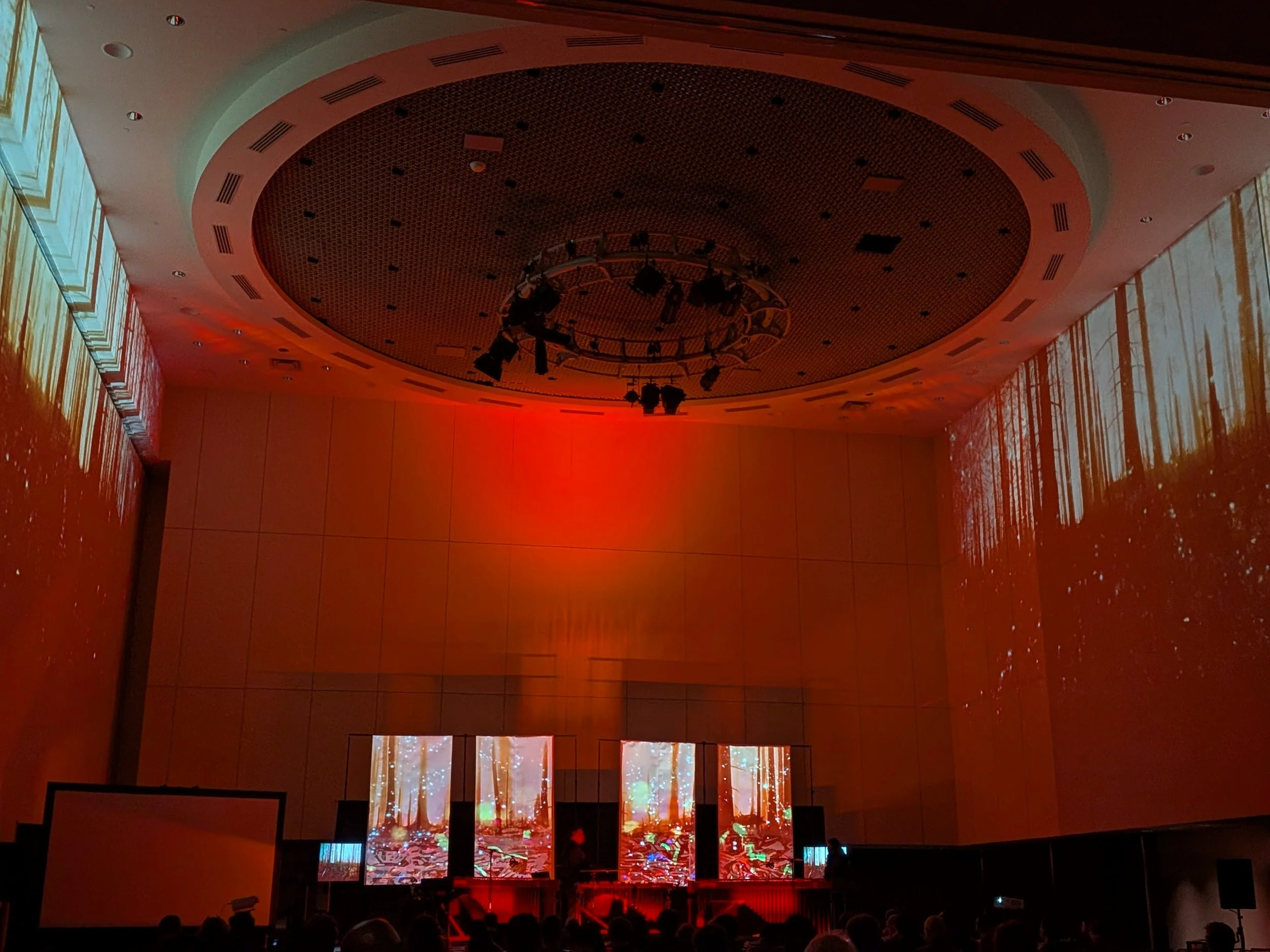
Lynn Vartan's performance. I was transfixed, by the music and by the four screens surrounding it. This was one of many sessions that incorporated climate change, and seeing how many musicians care deeply about the environment resonated with me too.
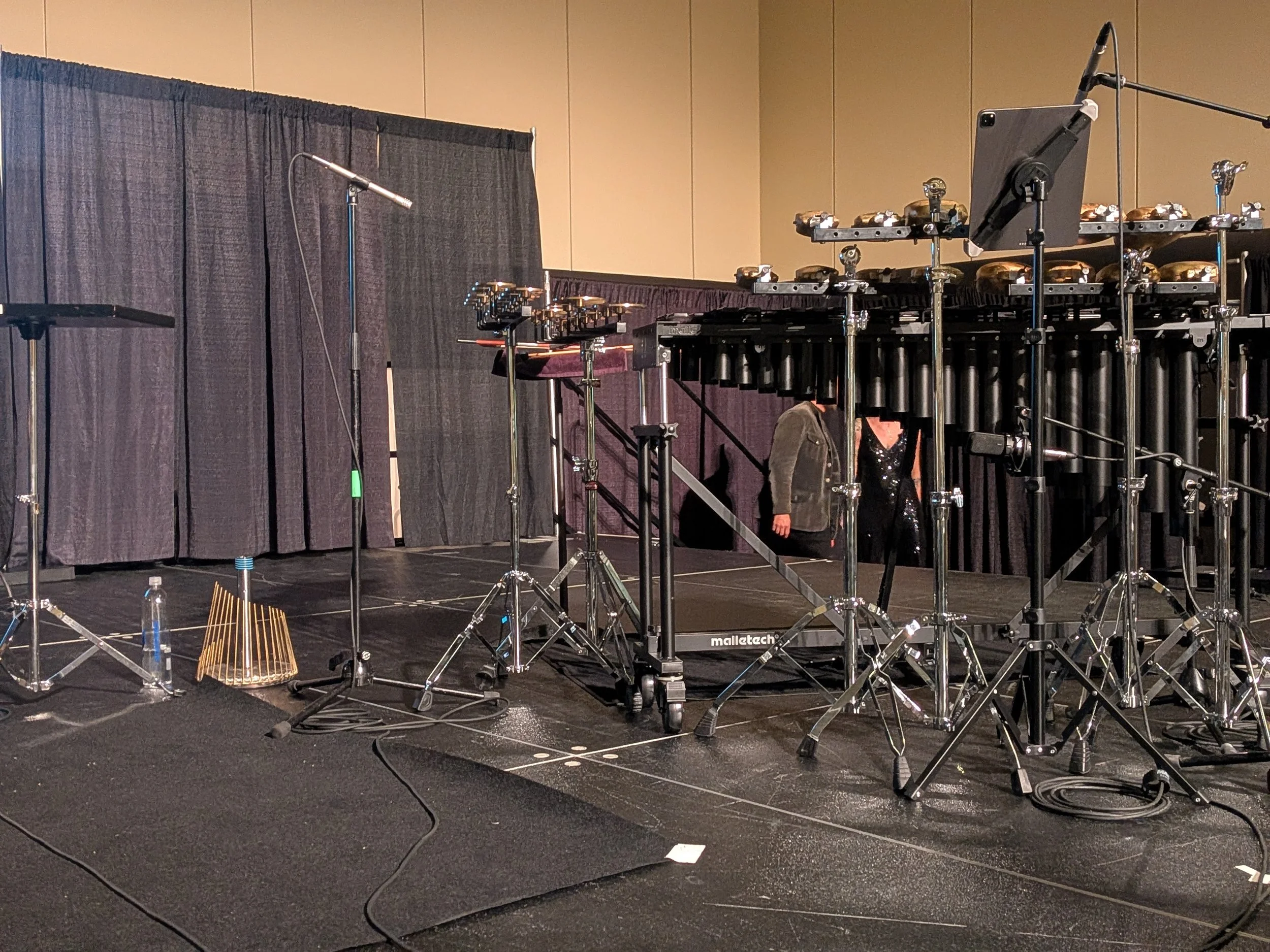
A composition talk with Hannah Weaver, Rosie CQ (Ireland), and Angela Kepley (UK). Their piece grew from the idea that as the sun swells into a giant star and swallows Mercury, Venus, and Earth, Saturn's ice mountains will someday become the last oceans of our solar system. Woah. The excerpts they shared were lovely, and I saw the Waterphone for the first time. It's pitched, and I was fascinated.
Francisco Abreu’s workshop on Brazilian swing rhythms on the snare drum. The playlist was so much fun to listen to, and the whole audience patted their laps along with the rhythms being taught.
La Perla Bogota. What can I even say? Go check out this band!
The Hellcats. Surprisingly entertaining storytellers. I learned that theirs is the oldest, longest-running music job in the country, and that West Point is the only place that still employs a live bugler.
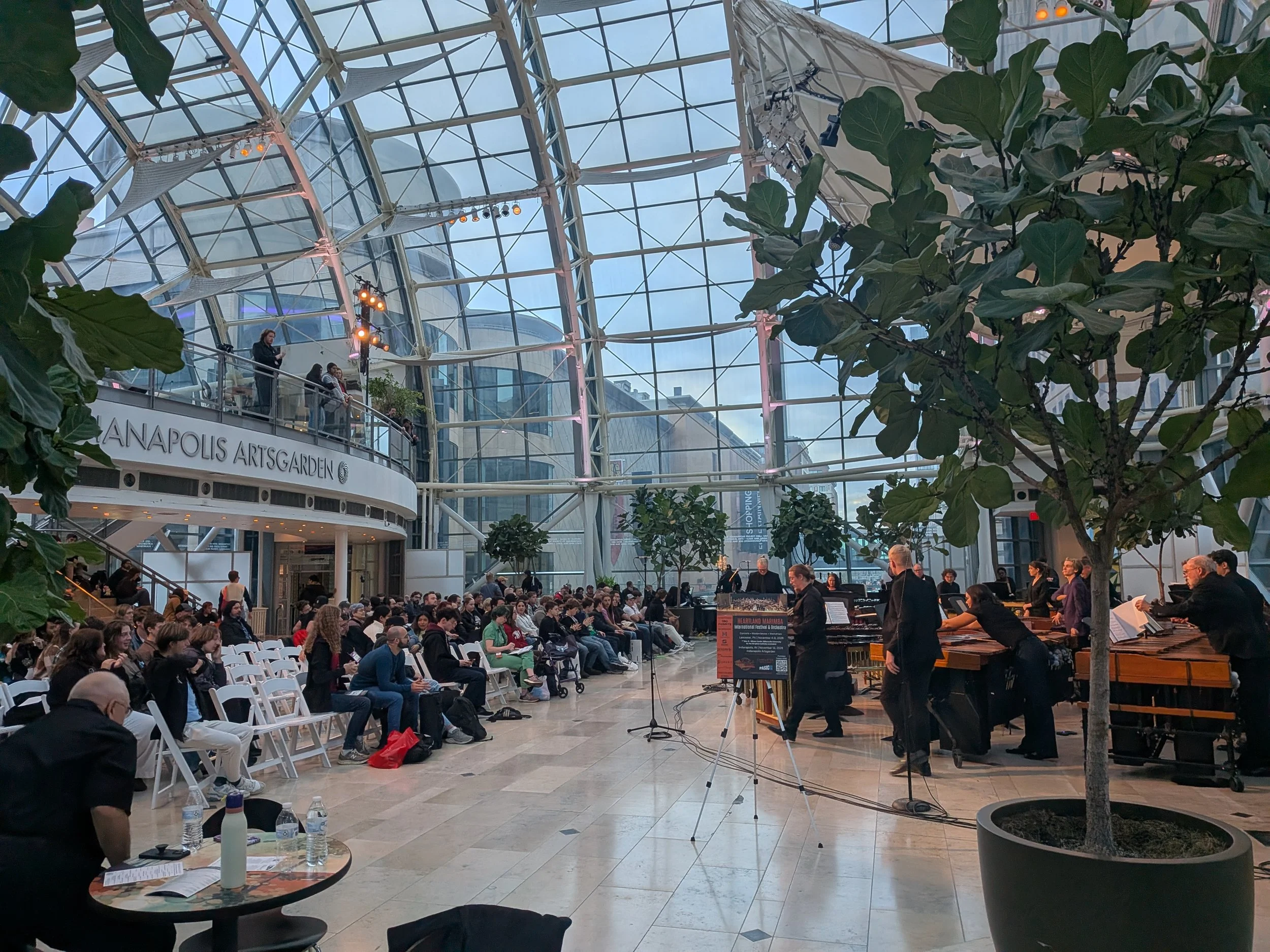
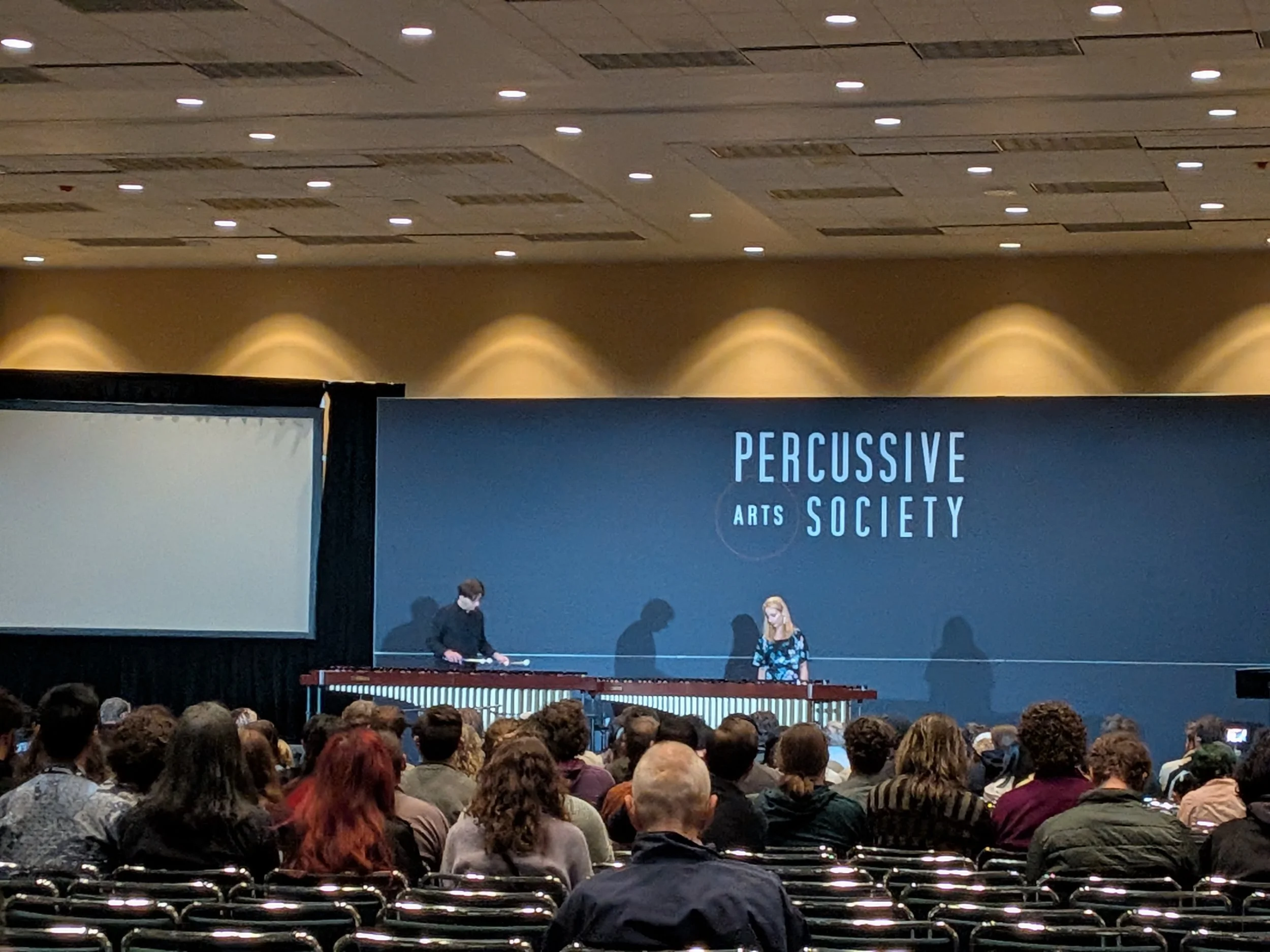
Lucid Duo, from Austria. Two marimbas, absolutely beautiful. I couldn't believe how talented they were. There was no program, but I loved every piece, especially one Tomasz wrote with little melodies in the bridge section over the rolls. And this piece, which I’ve struggled to play on piano but never heard on marimba: https://www.youtube.com/watch?v=MWqw8wPE5M8
Andy Krause teaching uncommon bodhran rhythms with Legos. He went through jigs, polkas, slip jigs, and reels, then moved into pieces in 7, 5, 10, and 9.
What I'm bringing home
Between the talks, the concerts, and the hallway conversations, PASIC filled my notebook. A few things I'm taking back into my practice:
Listening closely to small differences. A tambourine tilted a few degrees sounds completely different, and clients offer us equally subtle information. A slight adjustment to some element of music can change the mood or motivation entirely.
Giving the music space. Sometimes the most effective thing I can do is simplify and find the groove.
Resting like it matters. From the session on sleep: wake up at the same time every morning, regardless of bed time, and give your brain time to cool down (like a casserole). As one speaker put it, burnout is when your phone dies and you only plug it in for five minutes so you can get one last thing done. Think of rest as part of the work, not a reward for finishing it.
Making space for people who don't want to be pioneers. I'm carrying Raychel Taylor's words into how I teach, give feedback, and welcome new clients.
PASIC reminded me why I keep showing up for continuing education: not just for techniques, but for the feeling of being in a room where nobody has to explain why this matters. Being a music therapist can sometimes mean proving yourself in two worlds at once. For four days, I didn't have to.
If you'd like to talk about how rhythm and percussion can support you, your loved one, or your community, schedule a consultation or training. And if you were at PASIC, tell me which session stayed with you. I'd love to hear. As Steve Gadd reminded us, it's all an education, if you keep your mind open to it.